4 Questions To Ask Before Choosing A Part Numbering System
August 9, 2022

Considerations for a great Part Numbering System

Hey, Congrats! You've got an idea for a product and maybe some design files, neatly organized (or not), and you feel it's time for part numbering. 


But what part numbers (P/Ns) should you pick? 


It seems simple enough, but here are some of the less obvious things you should consider now to avoid headaches later:

1. Do you want to assign classes to your Part Numbers? 


Sometimes companies will create part numbering classes. I.e., if your base P/N is four digits long (YYYY), you may add a few digits as a prefix (XX) to categorize the parts. 


An example of categorizing parts based on type: 

Cables begin with 10; Custom metal parts begin with 20; packaging begins with 30, and so on. 

P/Ns in this system might look like XX-YYYY (e.g., 10-YYYY, 20- YYYY, 30- YYYY) 


Benefits: 

  • Quickly identify what you are looking at from the P/N prefix 
  • Improve ability to recall or find a part by filtering for the prefix 


Drawbacks: 

  • Defining the classification criteria becomes a question in itself 
  • Adherence to the classes may be a challenge when new designers join the development team 
  • Overlapping classes of parts can cause confusion 
  • Multiple different P/N tracking logs might be necessary to track each class 
  • MRP/ERP systems might not be able to give you the next P/N for a given class easily


If you plan on using a class-style Part Numbering system, we suggest you:

  • Take the time to define your classes well
  • Ensure there is minimal overlap between classes
  • Generate some guideline documentation to help explain the classification criteria to new staff
  • Create an easy way (log or otherwise) to assign new part numbers for each class


2. Do you want an Alpha, Alpha-Numeric, or a Numeric Part Numbering system?


For this, I will define Alpha as A-Z (case insensitive) and Numeric as (0-9). 


Alpha or Alpha-Numeric Systems: 


Benefits: 

  • With fewer digits, you get more P/Ns (e.g., three alpha-numeric digits will get you 46,656 P/Ns, vs. three numeric digits will only get you 999 P/Ns) 


Drawbacks: 

  • Characters can get confused ("O" and "0", "I" and "1", etc.) 
  • Some people may use lowercase vs. uppercase digits
  • The next available P/N is not always straightforward (e.g., if you are at A39 in alpha-numeric, then your next number is likely A3A) 
  • MRP/ERP systems might not be able to give you the next P/N easily
  • Blocking P/Ns for a specific designer or group may get confusing:

e.g., Imagine telling someone:

"Ok, design me this widget; you can use this block of P/Ns A39 to AF9". 


If I were that designer, I would be unable to quickly tell how many P/Ns I have, nor how to increment them. 


Numeric Systems: 


Benefits: 

  • The next available P/N is clear as day (this benefit is not to be understated) 
  • MRP/ERP systems can easily give you the next available P/N 
  • No confounding characters 
  • No lowercase/uppercase issues 
  • Easily to block P/Ns for designers 


Drawbacks: 

  • Less P/N permutations are available


3. What happens to a Part Number when you update the part? 


Consider a Part Numbering system wherein the base format is four digits (YYYY). 


Now imagine you have a released cable of P/N 1638, and the next part number available in your system is P/N 2394. If you change the cable (P/N 1683) and your Part Number Change Rules* dictate that the P/N should change, you might end up with the cable changing to P/N 2394. 


This P/N jump is fine, but it can become a headache for design and operations staff who grow accustomed to the specific numbers they deal with daily. Also, if you ever want to see the old drawing for this cable, you might have to do a lot of digging before finding out that P/N 1638 was the last design iteration of P/N 2394. 


One way to get around this issue is to add a suffix to all your P/Ns (YYYY-ZZ). 


E.g., rather than changing P/Ns from 1638 to 2394, you would change from P/N 1638 to P/N 1638-01. Or rather, if you started with the suffix, P/N 1638-00 would change to P/N 1638-01. 


Important Distinction:

This suffix is not to be confused with revisions. 

The P/Ns 1638-00 and 1638-01 are as different as P/Ns 1638 and 2394. 


This suffix system just helps us mortals navigate our way around part folders and specs by providing a bit of continuity between updated part numbers. 


Further Work Instruction Benefit:

The other added benefit of having P/Ns change like this is that you can write your Work Instructions to reference parts like this:


"Connect cable 1638-xx to the flux capacitor." 


And let the BOM for the work order tell the assembler the specific cable to use (1638-01, 1638-02, etc.).

This suffix system lets you change the cable P/N without needing to respin your Work instructions.


*Part Number Change Rules to be discussed in a subsequent blog post.


 4. What Part Numbers do we use at Engineering CPR?


Since we are a contract manufacturer, we have used various Part Numbering Systems set out by our customers.


None are objectively good or bad; however, each does need different maintenance levels to make them sing. You can make most systems work as long as you develop and follow a process to mitigate any drawbacks of the Part Numbering System you choose.


If you're interested in knowing exactly how we do our Part Numbers and some more lessons-learned,

we invite you to join our Keener community, and we'll send you a breakdown!


By joining our community, you will also gain access to periodic deep dives like this one, plus other content.


Join our Community

* indicates required
torue wrenches
April 30, 2026
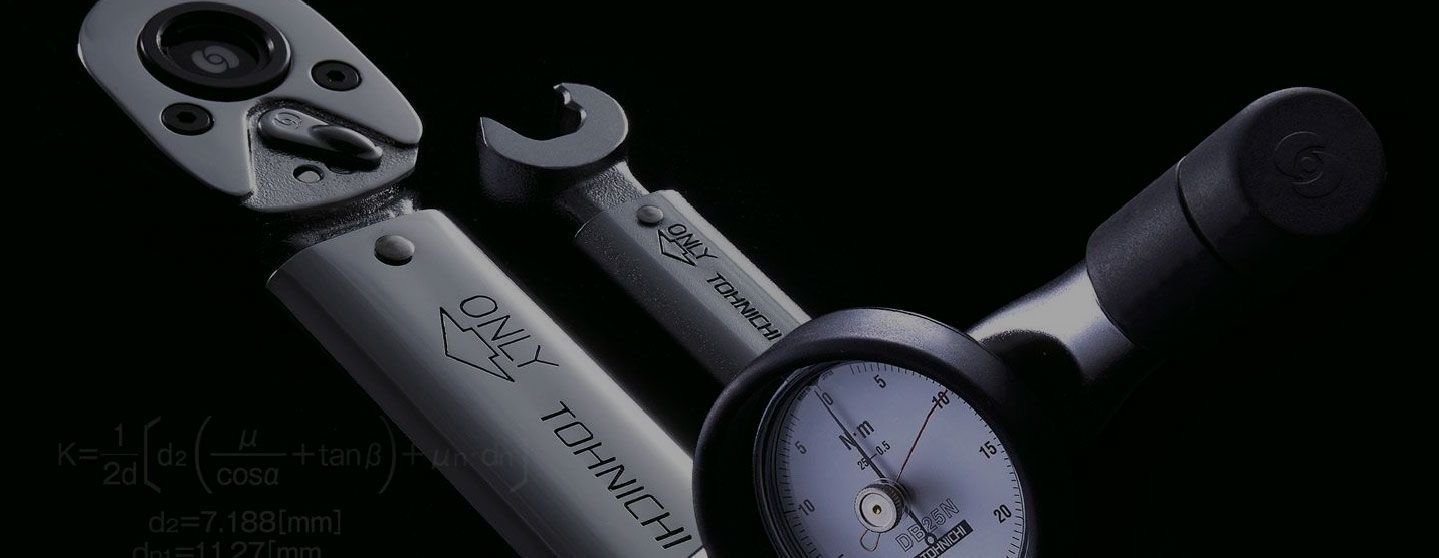
When a calibrated torque driver fails an in-house check after it's already been used on a clinical trial build, the question worth investigating isn't whether the tool is broken now. It clearly is. The question is whether the units built before the failure are still within spec, and whether you can defend that conclusion with evidence rather than assumption. A few weeks ago my Director of Quality came to tell me one of our torque drivers had been dropped. We tested it in-house right away and it was reading out of spec. Torque drivers get dropped, you replace them, you move on. The complication was that this particular wrench had been used the week before to build five units for a client's clinical trial. The wrench had a clean recent record. It came back from a full external calibration six months ago, with another six months of useful life ahead of it. About a month before the clinical build we'd spot-checked it on our in-house calibrated torque checker, and it was in spec then too. So when it failed yesterday's test, the obvious story was that the drop had broken it, and the obvious story was probably right. The problem with stopping there is that "probably right" doesn't survive contact with a regulator, and it doesn't really survive contact with a thoughtful client either. We were either going to show that the five clinical units were still good, or we were going to tell the client they weren't. Splitting the difference wasn't an option. Did the drop cause the calibration failure, or did the tool drift earlier?  Honestly, we don't know for certain. The drop is the obvious cause and probably the real one, but we can't rule out earlier drift, and it turns out we don't need to. Whether the drop did it or whether the tool had been creeping out of spec for weeks, the only question with practical consequences is whether the screws on the clinical units were torqued to a value that puts them at risk. So we worked backwards from that. What was the nominal torque setting, how far out was the wrench reading, in which direction, and where in the assembly was it being used. How do you check a torque wrench when your checker doesn't reach the working range? The wrench is an adjustable torque driver set to 5 Nm for a single joint in the build. It was going out for full external calibration regardless — that's not optional after a known impact event — but we wanted a data point quickly. Our in-house checker only goes up to 3.5 Nm, so we set the wrench to 3 Nm and ran it. It read 3.4 Nm, about 13% high. Direction matters as much as magnitude here. A wrench reading high means the operator hits the click later than they should, which means the screws received more torque than spec, not less. That is a meaningfully different failure mode than a wrench reading low. Is over-torque on a screw a risk to the assembly? This was where my Director of Quality and I started disagreeing, which is exactly what's supposed to happen. My read was that over-torque on this joint isn't a loosening risk. The screws are tighter than intended, not looser, and a tighter screw doesn't fall out. Quality pushed back that you can over-torque a screw to the point of stripping the threads, at which point it doesn't matter how high the tool was reading because the screw isn't holding anything. Fair point, and one I had a counter for. A stripped screw doesn't torque. The wrench never reaches the click, the assembler notices the joint isn't behaving the way it usually does, and the unit gets flagged. Our senior techs didn't flag anything on those five builds. Quality still wasn't satisfied. Even short of stripping, sustained over-torque can fatigue a joint and let it back off in service. That one I didn't have a clean answer for. Why a chemical thread-locker resolved the question What got us unstuck was a detail neither of us had on the tip of our tongue. Our manufacturing engineer, who has been close to this project from the start, mentioned that the joint in question also gets Loctite. That changed the picture. The over-torque was bounded at 13% above spec, not double. The screws weren't stripped. And the chemical thread-locker provides retention that doesn't depend on preload at all. Between those three facts the joint is fine, the units are fine, and we can defend that conclusion with evidence instead of assumption. What goes into a Non-Conforming Material Report (NCMR) for an out-of-cal tool? The rest was process. We opened a non-conforming material report on the torque driver with the full timeline, the measurement data, the failure mode reasoning, and the conclusion about the clinical units. Then we told the client. They'll have questions, and they should, that's part of why they hired us, but the rationale holds together and the records are auditable. The broader takeaway I don't think we over-complicated it. The temptation in this kind of situation is to take the convenient explanation, write a short report, and move on, because the convenient explanation is probably right. You don't get credit for being right by accident in a regulated environment. You get credit for being able to show your work. When Ops and Quality disagree, the disagreement is doing useful work, and you should let it run a little longer than feels comfortable before reaching for the answer. The other thing is that whoever is closest to the actual build usually knows something the people running the meeting don't. Neither I nor my Director of Quality remembered the Loctite. The engineer on the floor did, and that detail closed the case. Written by Jordan, Director of Operations at Engineering CPR — a Toronto-based ISO 13485-certified medical device contract manufacturer specializing in high-mix, low-volume elect ro-mechanical assemblies, cleanroom manufacturing, and box builds.
April 28, 2026
Why smaller service organizations beat the giants — and the gamble of an underfunded startup
By Jordan Worona September 1, 2023
How to make a Prototype?
More Posts