When considering product requirements, startup founders and investors will often consider the questions:
What features are essential,
what features are nice to have,
and what features are distractions?

You may have a good idea with a clear customer value, but if you implement the wrong features, your product could still flop. Understanding the Use-Cases in which your product will be used is the essential precursor to answering these formative questions above.
Use-Case Analyses are effective at identifying product requirements because they let you step into your customer's shoes. They allow you to experience the frustrations of your product firsthand before you even start designing it.
Doing a Use-Case Analysis early in product development will help you:
- Develop a comprehensive product requirements list that considers your customer's needs
- Focus your engineering talent on features/problems that matter
- Go to market sooner by reducing late-stage redesign
What is a Use-Case Analysis?
A Use-Case Analysis is a three-part activity.
First, you identify how a user interacts with your future product or existing products on the market. These user interactions are called Use-Cases.
Second, you analyze the Use-Cases for complexity.
E.g., Are there any unnecessarily tricky steps? Are there too many steps? Or does the user have to make difficult or unnecessary decisions?
Lastly, you eliminate the complexity from your Use-Cases wherever possible and important.
Eliminating complexity will improve your customer experience by saving them time and headaches; and helping them avoid use errors.
Always consider the three main aspects of Human Factor Design: the Users, the User Interface, and the Use Environments, when determining the importance of removing a step/decision.
What are some successful Products that have employed a Use-Case Analysis?
The products in the examples below have distinguished themselves by removing steps or decisions customers would otherwise have made.
They were successful in removing the right steps because they considered the three main aspects of Human Factors Design:
- the Users,
- the User Interface,
- and the Use Environments.
1. Gmail Smart Compose
In 2018, Gmail launched a new feature so Users can write emails faster.
Gmail now performs the first step of entering a recipient's name (e.g., "Hi Jacqueline") and will also propose phrases matching your typical structure and tone.
While typing “Hi Jacqueline” takes seconds, this feature saves Gmail users more than a few simple keystrokes. It allows users to jump quickly into the meat of their email—no more moments of hesitation or pleasantry considerations.

Image: Google
This example shows the importance of considering the User when doing a Use-Case Analysis. In this example, the critical User characteristic is their mental state of being in a hurry. This mental state may feel like a universal User condition, but depending on your product, it may differ. If Google were making software for writing personal journal entries for self-reflection, this feature would likely be more annoying than helpful. In that scenario, the User’s mental state would be very different.
By considering the Use-Case and the User, Google honed its Machine Learning tech on a problem that matters to its Users: writing emails quickly.
2. Breville "A Bit More" Toaster
In 2017,
Breville
unveiled a toaster with a new feature, the "A Bit More" button.
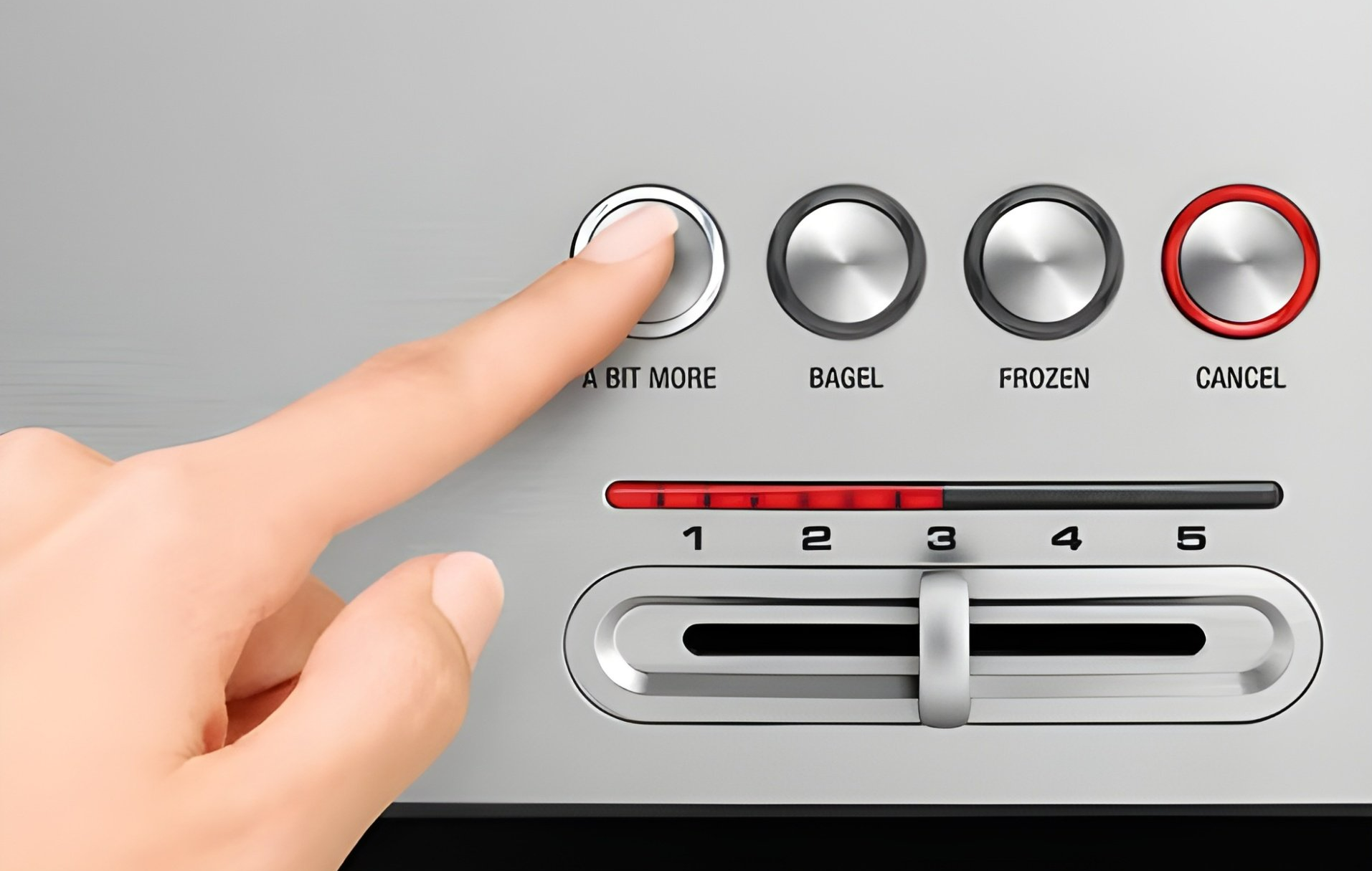
Image: Breville
The button aimed to fix the problem that we all know too well:
- You put bread in the toaster.
- It comes up too light.
- You put your toast back down, intending to stop the toaster shortly.
- You forget.
- Your toast is burnt.
Breville solved the Burnt Toast problem by analyzing this Use-Case and considering their User Interface's limitations. They added an "A Bit More" button to remove the impact of User forgetfulness. This User-Interface addition changed the Use-Case to:
- You put bread in the toaster.
- It comes up too light.
- You press the "A Bit More" button.
- Your toast is perfectly cooked.
Breville's solution to an age-old problem did not require significant technological advancements or a genius designer. All it needed was a comprehensive Use-Case Analysis with particular attention to the User Interface to identify the problem that needed solving. Once we know the problem, fixing it is rarely all that difficult. Sometimes it is as simple as adding a button.
Once we know the problem,
fixing it is rarely all that difficult.
Sometimes it is as simple as adding a button.
P.S. The Atlantic thought this product was worth a full write-up: Why a Toaster Is a Design Triumph
3. Japanese Ketchup & Mustard packet
Japan, the country that brought us The Toyota Way, brings another leap forward: single-hand operated Ketchup and Mustard packets.
You may be familiar with the problem; you have a hotdog in one hand and your sealed ketchup and mustard packets in the other. How do you open the packets?
Some use their teeth; others try to use a few fingers from their hotdog hand; others search for a clean resting spot for their hotdog.
Each option presents risks, whether to the hotdog or our clothing.
7-11s in Japan have dealt with this problem by creating a ketchup and mustard packet that can be opened and dispensed with one hand.

Image: Imgur
This example shows the importance of considering the Use Environment alongside the Use-Case. By recognizing that a clean, sturdy surface isn’t always around when dressing your hot dog, these designers could identify the problem to be solved; single-hand condiment dispensing.
With this problem definition, they could develop a novel, low-tech solution.
Conclusion
As you can see, a Use-Case Analysis is an effective means of turning your product idea into a product that truly stands out.
By considering the User, the User Interface, and the Use Environments alongside your Use-Case, you can quickly identify the critical problems to be solved for your customers.
Once you do that, it is simple to create thoughtful and unique features that fulfill your customer's needs before they even know it is something they need.
How to perform a Use-Case Analysis?
So now that you have a bit of an idea of how a Use-Case Analysis can help take your product from average to extraordinary, you probably want to try it yourself.
If you would like a Use-Case Template, sign up below, and we'll send you ours, along with some explanations and examples on how to use it.
By joining our community, you will also gain access to periodic deep dives like this one, plus other content.